

Introduction to Globalization — Meaning, Types, Impacts, and Examples

Introduction
This introduction to globalization explains how countries and societies around the world are becoming increasingly interconnected and interdependent. Globalization is a complex process that involves the integration of economies, cultures, societies, and systems of governance across national boundaries. In human geography, globalization matters because it helps us understand how actions in one place can influence people and environments elsewhere.
Advances in transportation and communication technologies, along with the liberalization of trade and investment, have made it faster and easier for goods, services, information, and ideas to flow across the globe.
Through globalization, local communities are linked to global networks of production, culture, and decision-making. These connections shape economic growth, cultural exchange, political cooperation, and environmental change. This article explores the meaning of globalization, the key forces driving it, its major types, and its wide-ranging impacts. It also uses real-world examples to explain why an introduction to globalization is essential for geography students seeking to understand today’s increasingly connected world.
What Is Globalization?
Globalization is the process through which the world becomes more connected as people, countries, and regions interact across space and national borders. In academic terms, globalization refers to the increasing integration and interdependence of economies, societies, cultures, and political systems on a global scale. It explains how events, decisions, and activities in one part of the world can have direct or indirect effects on other places, even those thousands of kilometers away.
At the core of globalization are global flows. These include the movement of goods and services through international trade, the flow of people through migration and tourism, the transfer of capital and investments across countries, and the spread of ideas, information, technology, and culture through media and communication networks.
Unlike internationalization, which mainly focuses on relationships between individual countries, globalization goes a step further by creating complex global networks that link multiple regions at the same time. This is why globalization is seen as a key concept in human geography for understanding how the modern world functions as an interconnected system.
Historical Background of Globalization
Globalization may feel like a modern phenomenon driven by the internet and fast travel, but in reality, it is not entirely new. The process of connecting different parts of the world has been unfolding for centuries, evolving alongside changes in technology, trade, and human organization. What makes today’s globalization unique is its speed, scale, and intensity, not the idea of global connection itself. Understanding the historical background of globalization helps geography students see it as a gradual process rather than a sudden event.
Early Forms of Globalization
Early forms of globalization developed through long-distance trade, migration, and cultural exchange. One of the most famous examples is the Silk Road, a network of trade routes that connected Asia, the Middle East, Europe, and parts of Africa. Through these routes, goods such as silk, spices, gold, and textiles were exchanged, along with ideas, religions, technologies, and cultural practices.
Colonial trade and exploration further expanded global connections. European exploration from the 15th century onward linked the Americas, Africa, Asia, and Europe in new ways. While this period increased global trade and interaction, it also involved exploitation, slavery, and unequal power relations. These early connections laid the foundation for today’s global economic and political systems.
Modern Globalization
Modern globalization accelerated with the Industrial Revolution, which transformed production, transportation, and trade. The development of factories, steamships, and railways made it possible to produce goods on a large scale and move them across long distances more efficiently. This period marked a major shift toward global markets and industrial economies.
After World War II, globalization expanded rapidly due to international cooperation, trade agreements, and the creation of global institutions. Advances in aviation, container shipping, and telecommunications further reduced barriers between countries. In the late 20th and early 21st centuries, the digital and technological era reshaped globalization again, with the internet, mobile technology, and digital platforms connecting people, businesses, and cultures almost instantly. Today, globalization influences nearly every aspect of human life, from economies and education to culture and communication.
Drivers of Globalization
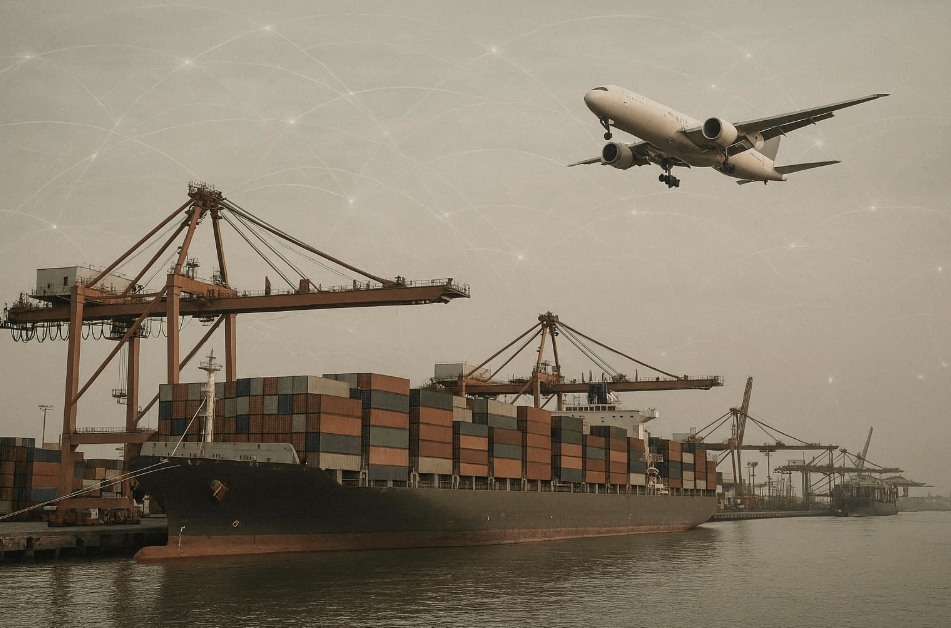
Globalization does not happen by chance. It is driven by a combination of powerful forces that reduce distance, speed up interactions, and connect societies across the world. These drivers of globalization work together to increase the flow of goods, people, ideas, culture, and information between countries. Understanding these forces helps geography students explain why global connections have grown rapidly in recent decades and why the world feels more interconnected than ever before.
Technological Advances
Technological advancement is one of the strongest drivers of globalization. Improvements in transportation such as airplanes, container ships, and high-speed rail have made it faster and cheaper to move goods and people across long distances. At the same time, developments in communication technology, especially the internet, mobile phones, and digital platforms, allow instant communication between different parts of the world. These technologies connect businesses, governments, and individuals in real time, making global interaction a normal part of everyday life.
Economic Factors
Economic forces also play a major role in driving globalization. Trade liberalization, which involves reducing tariffs and trade barriers, allows countries to exchange goods and services more freely. This has encouraged the growth of international trade and global markets. Multinational corporations further accelerate globalization by operating in multiple countries, setting up factories, offices, and supply chains across continents. Through these activities, economies become more interconnected and dependent on one another.
Political Factors
Political decisions and cooperation between countries help shape the pace and direction of globalization. International agreements promote cooperation in areas such as trade, security, and environmental management. Global institutions and regional partnerships also create rules and frameworks that support cross-border interactions. By encouraging cooperation rather than isolation, political factors make it easier for countries to participate in global networks.
Social and Cultural Factors
Social and cultural processes contribute significantly to globalization as well. Global media spreads music, films, fashion, and ideas across borders, influencing lifestyles and cultural practices worldwide. Migration allows people to move between countries for work, education, or safety, creating multicultural societies and global connections. Education also supports globalization by promoting international exchange programs, global knowledge sharing, and cross-cultural understanding. Together, these social and cultural factors help shape a more interconnected global society.
Types of Globalization

Globalization does not happen in just one way. Instead, it operates across several interconnected dimensions that shape how countries, communities, and individuals interact with one another. In human geography, understanding the types of globalization helps explain why economic activities, cultural practices, political decisions, and technological innovations increasingly cross national borders. These dimensions often overlap, but each plays a distinct role in driving global interconnectedness.
- Economic Globalization
Economic globalization refers to the growing integration of national economies into a single global system. It is driven by international trade, foreign direct investment, and the expansion of global markets. Countries now depend on one another for raw materials, manufactured goods, and services, making production and consumption truly global. Multinational companies operate across borders, while goods produced in one country are sold and used in many others. This form of globalization shapes employment, income levels, and economic growth worldwide. - Cultural Globalization
Cultural globalization involves the spread and exchange of ideas, values, and lifestyles across the world. Languages, food, music, fashion, and media now move easily between societies, leading to shared cultural experiences. Global television networks, social media platforms, and streaming services allow people to consume the same content regardless of location. While cultural globalization encourages cultural exchange and understanding, it also raises concerns about the loss of local traditions and identities. - Political Globalization
Political globalization focuses on cooperation between countries through international agreements, institutions, and global governance systems. Nations increasingly work together to address shared challenges such as climate change, security, trade regulations, and public health. International organizations and treaties help coordinate policies and promote collective decision-making. This type of globalization highlights how political actions in one country can have global consequences. - Technological Globalization
Technological globalization is driven by rapid advances in communication and information technology. The internet, mobile devices, and digital platforms allow instant communication and information flow across vast distances. Businesses operate online, students learn remotely, and ideas spread globally within seconds. This form of globalization connects all other types by making economic transactions, cultural exchange, and political coordination faster and more efficient.
Together, these types of globalization show how deeply connected the modern world has become and why globalization remains a key concept in human geography.
Impacts of Globalization
Globalization has far-reaching effects on countries, communities, and individuals around the world. While it has created new opportunities for economic growth, innovation, and cultural interaction, it has also introduced serious challenges related to inequality, cultural identity, and environmental sustainability. Understanding the impacts of globalization helps geography students see why this process is often described as both beneficial and controversial, depending on who is affected and how.
Positive Impacts of Globalization
One major positive impact of globalization is economic growth. By opening up international trade and investment, countries can access larger markets, attract foreign capital, and create jobs. Many developing countries have experienced rapid industrial growth by participating in global supply chains.
Globalization has also improved access to technology and information. Advances in communication technologies allow ideas, knowledge, and innovations to spread quickly across borders. This has transformed education, healthcare, business, and scientific research, making modern tools and services more widely available than ever before.
Another important benefit is cultural exchange. Through travel, media, migration, and the internet, people are exposed to different languages, traditions, foods, and lifestyles. This interaction can promote mutual understanding, tolerance, and global awareness, especially among younger generations.
Negative Impacts of Globalization
Despite its benefits, globalization has also increased economic inequality. Wealth and profits are often concentrated in developed countries and multinational corporations, while workers in poorer regions may face low wages, job insecurity, and poor working conditions. This uneven distribution of benefits creates gaps between and within countries.
Globalization can also lead to cultural homogenization, where local cultures, languages, and traditions are overshadowed by dominant global cultures. The widespread influence of global media and brands can reduce cultural diversity and weaken indigenous identities.
In addition, globalization contributes to environmental degradation. Increased industrial production, transportation, and resource extraction place heavy pressure on natural environments. Issues such as pollution, deforestation, climate change, and loss of biodiversity are closely linked to the global expansion of economic activities.
Overall, the impacts of globalization are complex and interconnected. Studying both the positive and negative effects allows students to develop a balanced understanding of how globalization shapes economies, cultures, and environments across the world.
Globalization and the Environment
Globalization and the environment are closely connected because environmental issues do not respect national borders. One of the clearest examples is climate change, which is a truly global problem. Greenhouse gas emissions produced in one country can affect weather patterns, sea levels, and ecosystems across the world. Through globalization, industrial activities, transportation networks, and energy consumption have expanded rapidly, increasing environmental pressures on a global scale.
Globalization also influences how natural resources are exploited and distributed. The growing demand for raw materials such as oil, minerals, timber, and agricultural products often leads to large-scale resource extraction in developing regions to supply global markets. While this can support economic growth, it may also result in deforestation, land degradation, pollution, and loss of biodiversity if resources are not managed sustainably.
At the same time, globalization highlights environmental interdependence between countries. Environmental damage in one region can affect others through shared oceans, the atmosphere, and global supply chains. This interconnection has encouraged international cooperation through global environmental agreements, shared conservation efforts, and climate action initiatives. Understanding globalization and the environment helps geography students see why protecting the planet requires coordinated global solutions rather than isolated national actions.
Globalization and Inequality
One major issue often discussed in an introduction to globalization is inequality. While globalization has created opportunities for economic growth and development, its benefits are not shared equally across the world. The gap between the Global North and the Global South highlights how some regions gain more from global connections than others. Wealthier countries in the Global North often have stronger economies, advanced technology, and greater political influence, allowing them to benefit more from global trade, investment, and innovation.
As a result, globalization produces clear winners and losers. Multinational corporations, skilled workers, and developed economies often gain higher profits and better living standards, while poorer regions may face low wages, job insecurity, and exploitation of natural resources. This leads to uneven development, where some areas experience rapid growth while others remain trapped in poverty. Understanding globalization and inequality helps geography students see that globalization is not just about connection and integration, but also about power, access, and fairness in the global system.
Globalization in Everyday Life
Globalization is not just an abstract concept studied in textbooks; it shapes everyday life in simple and familiar ways. The food we eat is a clear example. Many meals today depend on global food supply chains, where crops are grown in one country, processed in another, and consumed in a completely different part of the world. Rice, wheat, coffee, and fruits often travel thousands of kilometres before reaching local markets, showing how closely connected global agriculture and trade have become.
Technology also highlights globalization in daily life. Smartphones, laptops, and internet services rely on components, software, and expertise from multiple countries. A single mobile phone may be designed in one region, assembled in another, and used worldwide. Through social media, online learning, and instant communication, people can interact across continents in real time, making the world feel smaller and more connected.
Fashion and media further demonstrate globalization’s influence. Clothing styles, music, films, and social trends now spread rapidly across borders through global brands and digital platforms. A fashion trend in one city can quickly become popular worldwide, while movies, television shows, and streaming content allow cultures to reach global audiences. These everyday experiences show how globalization affects lifestyles, choices, and cultural exchange, making it a key topic in human geography.
Why Globalization Matters to Geography Students
Globalization is a core topic in human geography, making it highly relevant for exams, coursework, and field studies. Questions on globalization often test students’ understanding of global connections, trade, migration, cultural exchange, and development patterns. Grasping this concept helps students explain why places are no longer isolated and how global forces shape local environments and societies.
Beyond exams, globalization links key branches of geography, including economic, political, cultural, and environmental geography. It encourages systems thinking by showing how events in one part of the world can trigger economic changes, cultural shifts, or environmental impacts elsewhere. For geography students, understanding globalization also has strong real-world value. It helps explain everyday issues such as international trade, global inequality, climate change, and the spread of ideas and technology, making geography more relevant to life beyond the classroom.
Conclusion
Globalization is a powerful process that explains how the world has become increasingly connected through economic activities, cultural exchange, technological advancement, and political cooperation. By understanding the meaning of globalization, the key forces driving it, and its wide-ranging impacts, it becomes easier to see how local places are influenced by global systems. From trade and communication to culture and the environment, globalization shapes how people live, work, and interact in the modern world, making it a vital concept in human geography.
Ready to test what you have learned? Take our Globalization Quiz to check your understanding of globalization, its drivers, and its real-world impacts, and strengthen your grasp of this essential geography topic.
Further Reading & External References
-
Globalization – Encyclopaedia Britannica
https://www.britannica.com/topic/globalization -
What Is Globalization? – International Monetary Fund (IMF)
https://www.imf.org/en/Topics/globalization -
Globalization Explained – World Bank
https://www.worldbank.org/en/topic/globalization -
Introduction to Globalization – National Geographic Education
https://education.nationalgeographic.org/resource/globalization/ -
Globalization and Its Impacts – OECD
https://www.oecd.org/globalisation/

Idara Eniang is a passionate digital creator and geographer dedicated to making geography simple, visual, and accessible.


