

What Flag Is Black, Red, and Yellow? Countries, Meanings & History
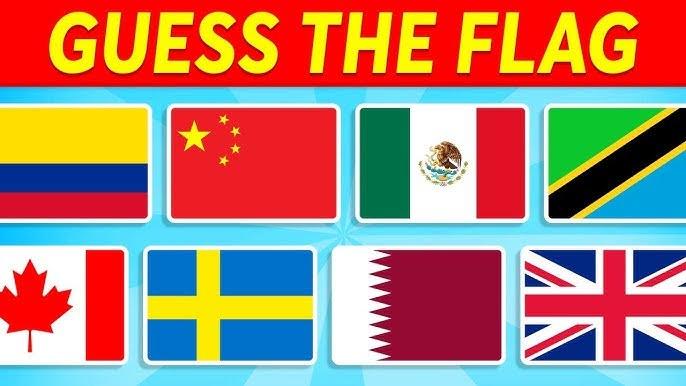
Colors carry meaning. They tell stories about history, identity, and the values a nation holds close. Among the most striking tricolor combinations in the world is black, red, and yellow, a palette shared by a small group of nations, each with a rich and distinct background. Whether spotted on a world map, a sports broadcast, or a flag guessing game, these colors are instantly recognizable to those who know their history.
Germany: The Most Recognized Black, Red, and Yellow Flag
When most people picture a flag with black, red, and yellow, Germany is the first country that comes to mind, and for good reason. The German flag features three equal horizontal stripes: black on top, red in the middle, and gold (sometimes described as yellow) on the bottom.
The origins of this color combination stretch back centuries. The colors are believed to have roots in the uniforms of the Lützow Free Corps, a volunteer military unit formed during the Napoleonic Wars in the early 19th century. The soldiers wore black coats with red facings and gold buttons, a look that gradually became associated with the broader movement for German unity.
By the time of the 1848 revolutions, black, red, and gold had become the symbolic colors of German liberalism and national unity. Revolutionaries and reformers adopted the tricolor as a banner for their cause. Though the movement was eventually suppressed, the colors lived on in public memory.
The Weimar Republic officially adopted the black-red-gold flag in 1919. After the Nazi period, during which the flag was replaced with the swastika banner, the tricolor was restored to West Germany in 1949 and later became the flag of the reunified Germany in 1990. Today, the German flag stands as a proud symbol of democracy, unity, and resilience.
Belgium: A Similar Palette, A Different Story
Belgium also flies a flag with black, yellow, and red, though its arrangement is vertical rather than horizontal. The three vertical stripes run from left to right: black, yellow, and red.
Belgium’s flag draws its colors from the coat of arms of the Duchy of Brabant, a historical region in what is now Belgium and the Netherlands. The Duchy’s arms featured a golden lion on a black field with red claws and tongue, colors that were adapted into the national flag when Belgium declared independence from the Netherlands in 1830.
While both Belgium and Germany share these three colors, the visual effect is quite different. Germany’s horizontal layout and slightly different shade of gold set it apart from Belgium’s more vivid vertical tricolor. In a flag guessing game, players are often asked to tell the two apart, a challenge that trips up many participants worldwide.
Uganda: The African Tricolor
Uganda’s flag features black, yellow (gold), and red as well, though in a notably different design. The Ugandan flag consists of six horizontal stripes alternating between black, yellow, and red, repeated twice. At the center sits a white circle containing the grey crowned crane, Uganda’s national bird.
Adopted in 1962 upon independence from British rule, the colors of Uganda’s flag carry specific symbolic meaning. Black represents the African people, yellow symbolizes the sunshine and vitality of the continent, and red stands for African brotherhood and the blood that connects all people.
Uganda’s use of these colors reflects a broader tradition across African nations of choosing black, red, and gold or yellow, colors often associated with Pan-Africanism, a movement that celebrates African unity and heritage.
Papua New Guinea: A Unique Take
Papua New Guinea’s flag introduces black and red in a striking diagonal design. The flag is divided diagonally: the upper triangle is red with a yellow bird of paradise, while the lower triangle is black with the Southern Cross constellation rendered in white.
Adopted in 1971, shortly before independence from Australia, the flag was designed by a 15-year-old student named Susan Karike. The bird of paradise is a national symbol, and the Southern Cross reflects the country’s geographical position in the Southern Hemisphere. While yellow and black dominate more than a pure red-and-yellow-on-black scheme, the flag is still often categorized in discussions of black, red, and yellow national flags.
Why These Colors Appear Together So Often
There is a reason black, red, and yellow appear on so many flags around the world. Historically, these colors were all achievable with natural dyes and pigments long before modern synthetic materials were available. Yellow and gold came from saffron or metallic thread. Red was derived from plants and insects. Black came from charcoal or iron compounds.
Beyond practicality, these colors hold universal symbolic weight. Red is one of the most common flag colors in the world, representing courage, sacrifice, or revolution in nearly every culture. Black often denotes the past, resilience, or the people of a nation. Yellow and gold suggest prosperity, natural resources, or the sun. Together, they form a palette that communicates strength and identity, which is why so many nations have independently arrived at similar combinations.
Testing Knowledge: The Flag Guessing Game
For geography enthusiasts, trivia lovers, and students of world history, a flag guessing game is one of the most engaging ways to sharpen knowledge about national symbols. Flags with similar colors, like Germany and Belgium, are a popular category because they challenge players to focus on the details: stripe orientation, exact shade, or additional symbols like crests and emblems. These small visual differences make flag quizzes surprisingly competitive and genuinely fun for all age groups.
Final Thoughts
The combination of black, red, and yellow is one of the most historically loaded color schemes in vexillology, the study of flags. From the revolutionary movements of 19th-century Europe to the independence celebrations of 20th-century Africa, these colors have carried the hopes and identities of millions of people.

Idara Eniang is a passionate digital creator and geographer dedicated to making geography simple, visual, and accessible.
