What If Everything You Knew About Climate Change Was Incomplete
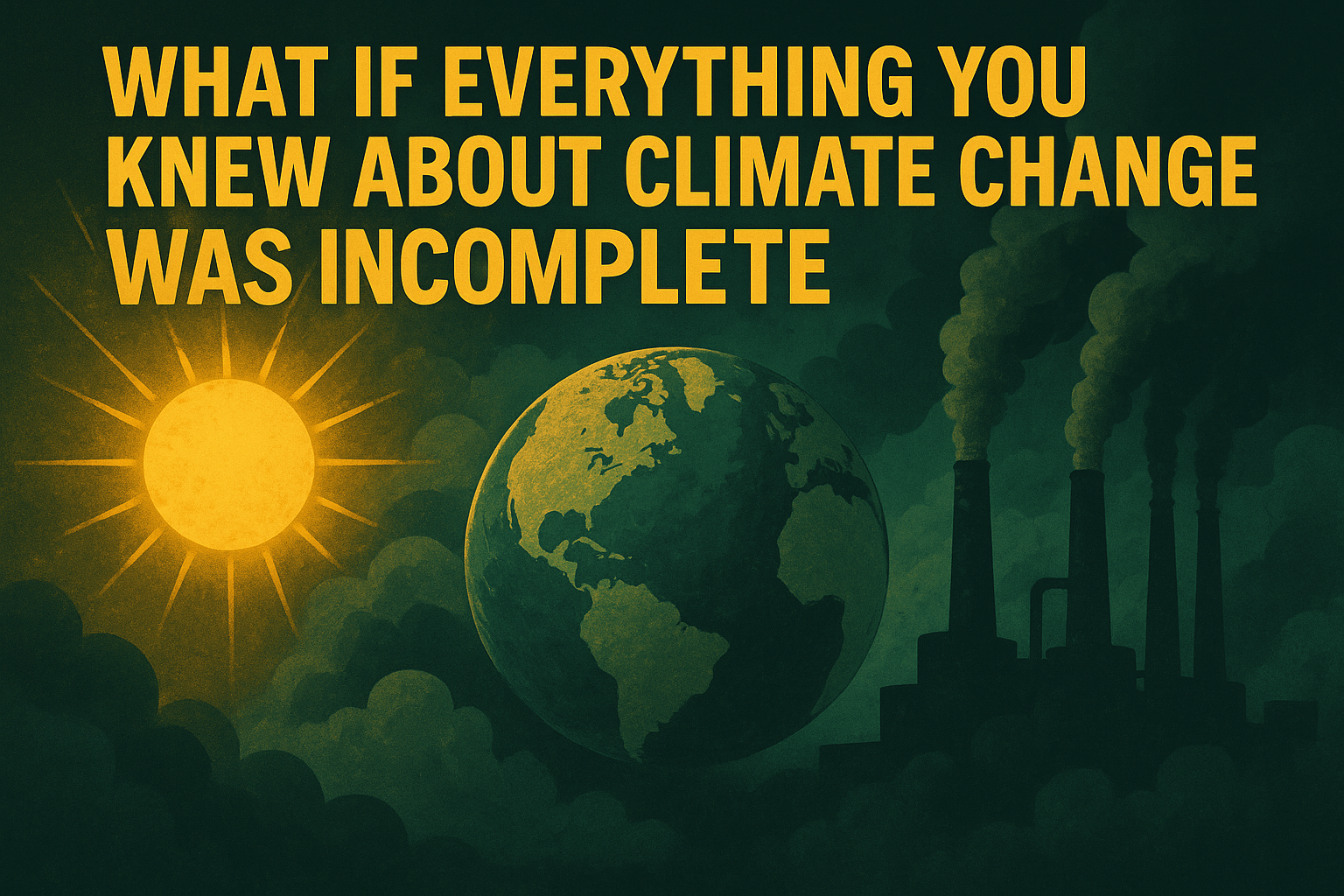
What if the story you’ve been told about climate change only scratches the surface?
While rising temperatures, melting ice, and extreme weather dominate the headlines, there’s a deeper, more complex reality unfolding—one that affects everything from the air we breathe to the food on our plates and the stability of our economies. Most people know the symptoms, but few truly grasp the full picture. Could it be that the real threat—and the real opportunity—lies in what we’ve overlooked? Keep reading, because the truth might surprise you.
Brief history of climate change
Climate change is not a new phenomenon—Earth’s climate has shifted over millions of years due to natural forces like volcanic eruptions, solar variations, and changes in the planet’s orbit. But what makes today’s climate crisis different is the unprecedented speed and scale of change driven by human activities.
Since the Industrial Revolution, the burning of fossil fuels, deforestation, and industrial agriculture have significantly increased concentrations of greenhouse gases, especially carbon dioxide and methane, in our atmosphere. These changes have amplified the greenhouse effect, leading to global warming and widespread environmental disruption.
Our scientific understanding has evolved dramatically, with pivotal moments such as the founding of the Intergovernmental Panel on Climate Change (IPCC) in 1988 and the global commitment made under the Paris Agreement in 2015. Yet, despite decades of research and rising awareness, one question remains: Have we truly grasped the full scope of what’s happening—and what’s at stake?
What Does Climate Really Mean
Before we dive deeper into climate change, it’s important to understand the true meaning of climate. Unlike weather, which changes daily, climate refers to the long-term average of temperature, humidity, precipitation, wind patterns, and other atmospheric conditions in a specific region—typically measured over decades or even centuries. Climate is a key factor that shapes ecosystems, agricultural productivity, and where people choose to live.
Influenced by latitude, elevation, ocean currents, and global air circulation, climate plays a powerful role in defining the Earth’s diverse environments. Understanding these dynamics sets the foundation for grasping how and why our planet’s climate is changing—and what that means for the future.
What Exactly Is Climate Change
Climate change refers to long-term shifts in global temperature and weather patterns—shifts that are no longer just natural. According to renowned climate scientist Dr. James Hansen, today’s climate change is largely driven by human-induced greenhouse gas emissions from burning fossil fuels and clearing forests. These activities trap heat in Earth’s atmosphere, intensifying global warming.
As a result, we’re witnessing rising sea levels, melting glaciers, more frequent extreme weather events, and major disruptions to ecosystems and food supplies. But here’s the alarming part: the full impact of these changes is still unfolding. Understanding what climate change truly means is the first step toward recognising why it’s considered one of the most urgent threats facing humanity today.
What are the Causes of Climate
Climate change is fueled by a mix of natural processes and, more significantly, human activities that pump greenhouse gases into the atmosphere. But what exactly are the biggest drivers of this global shift? Below are the most critical causes of climate change that are accelerating global warming and reshaping our planet’s future.
- Burning of Fossil Fuels: This involves using coal, oil, and natural gas to make energy for things like electricity, transportation, and heating. When we burn these fuels, they release gases like carbon dioxide into the air. These gases act like a blanket, trapping heat from the sun and making the Earth warmer. This process, called global warming, is a big part of why the climate is changing. So, the more fossil fuels we burn, the more gases we release, and the warmer the Earth gets.
- Deforestation: This is the process of cutting down trees and clearing forests. When forests are cut down for things like farming, building cities, or making paper, luxury furniture, etc. in order to meet the needs of humans, it reduces the number of trees that can absorb carbon dioxide from the air. Since trees help keep the Earth’s climate balanced by taking in carbon dioxide, cutting them down adds more of this gas (GHG) to the atmosphere, which leads to global warming and climate change. Deforestation also harms wildlife habitats and contributes to the loss of biodiversity.
- Industrial Processes: This refers to the activities involved in manufacturing goods, producing energy, and conducting various operations in factories and facilities. These processes often use machinery, equipment, and chemicals to produce goods or provide services. However, many industrial activities also release gases and pollutants into the air, including greenhouse gases like carbon dioxide and methane. These emissions contribute to climate change by trapping heat in the Earth’s atmosphere, leading to global warming and other environmental impacts. Therefore, efforts to address climate change often involve finding ways to reduce emissions from industrial processes while still meeting societal needs for goods and services.
- Agriculture: Agriculture significantly contributes to climate change through various practices. Livestock farming releases methane, a potent greenhouse gas, during digestion, while flooded rice fields emit methane as bacteria decompose organic matter. Additionally, the use of fertilizers in agriculture releases nitrous oxide, another greenhouse gas, into the atmosphere. Furthermore, deforestation for agricultural expansion reduces the number of trees that can absorb carbon dioxide, leading to higher atmospheric levels of this greenhouse gas. While agriculture is crucial for food production, it’s important to implement sustainable farming practices to mitigate its impact on climate change and ensure a more environmentally friendly approach to food production.
- Land Use Changes: Land use changes happen when people use land differently. For example, when forests are cut down to make space for farms, cities, or roads, it changes how the land works. These changes can affect the environment because they might release greenhouse gases into the air or disturb ecosystems. It’s important to think about how we use land and try to do it in ways that don’t harm the environment too much.
- Waste Management: This is when we throw away our trash, like food scraps and packaging, it often ends up in landfills. As this waste breaks down, it releases a gas called methane into the air. Methane is a powerful greenhouse gas that traps heat in the atmosphere, contributing to global warming and climate change. So, the way we handle our waste can have a big impact on the environment. Recycling, composting, and reducing waste can help minimize these harmful emissions and combat climate change.
- Natural processes: This refers to events and phenomena that occur in nature without human intervention. These processes can affect Earth’s climate in various ways. For example, volcanic eruptions release gases and particles into the atmosphere, which can temporarily cool the planet by blocking sunlight. Additionally, natural variations in the Earth’s orbit and solar radiation can influence climate patterns over long periods. While natural processes have always played a role in shaping Earth’s climate, human activities, such as burning fossil fuels and deforestation, are currently the main drivers of climate change.
What are the Effects of climate change?
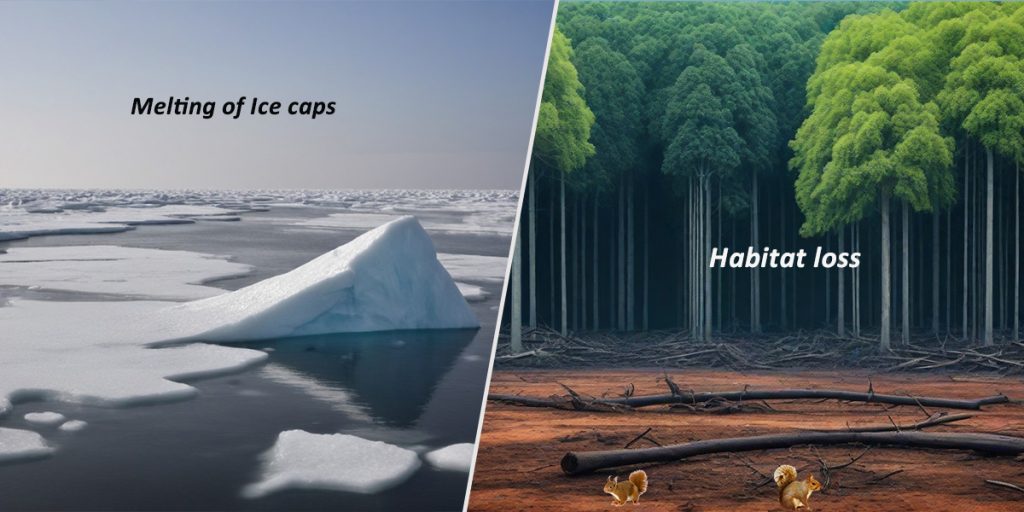
Climate change has a wide range of effects on both natural environments and human societies. The following are some of the key impacts:
- Rising Temperatures: This refers to the long-term increase in global average temperatures observed over several decades.. This occurs as a result of human actions like the burning of fossil fuels (like coal, oil, and gas) and the cutting down of forests (deforestation). These activities release gases that trap heat in the air, therefore making the Earth warmer. When temperatures go up, it can cause problems like the melting of ice, more heat waves, and changes in weather patterns. So, rising temperatures are a big deal and something we need to pay attention to.
- Melting Ice and Rising Sea Levels: When ice from glaciers and polar regions melts, it adds water to the oceans, causing sea levels to rise. This means that the water level along coastlines gets higher over time. As a result, low-lying areas near the shore can flood more easily, even during regular high tides. This flooding can damage homes, buildings, and infrastructure, and it can also harm plants and animals that live in coastal areas. Rising sea levels are a big concern for many communities around the world, especially those living near the ocean. A typical example of melting ice contributing to rising sea levels is the melting of the Greenland Ice Sheet. As temperatures rise due to climate change, the ice sheet experiences increased melting, leading to more water flowing into the ocean. This contributes to rising sea levels globally. In recent years, satellite measurements and on-the-ground observations have shown significant losses of ice from the Greenland Ice Sheet, causing concerns about the potential impacts on coastal communities and ecosystems worldwide.
- Changes in Precipitation Patterns: This refers to the alterations in the distribution, frequency, intensity, and timing of rainfall and snowfall in a given region over time. Some places may get more rain or snow than usual, leading to floods and landslides, while other areas may experience less rain, causing droughts and water shortages. These changes can affect farming, drinking water, and the environment, impacting people, animals, and plants in various ways.
- Loss of biodiversity: This refers to a decline in the variety of life forms and the genetic diversity within species, as well as the degradation of ecosystems. This can occur due to various factors, including habitat destruction, pollution, climate change, overexploitation of natural resources, and invasive species. When biodiversity decreases, it can disrupt the functioning of ecosystems and reduce their resilience to environmental changes. This can have far-reaching consequences, including the loss of ecosystem services such as pollination, water purification, and climate regulation, as well as impacts on human well-being, food security, and livelihoods. Protecting biodiversity is essential for maintaining the health and stability of ecosystems and ensuring the continued survival of species, including humans.
- Impacts on Agriculture and Food Security: Climate change has a significant impact on agriculture and food security because it alters temperature and precipitation patterns, influencing crop yields, water availability, and livestock health. Fluctuations in weather conditions can lead to pest and disease outbreaks, jeopardizing crop productivity and requiring increased resources for pest management. Droughts and water scarcity further strain agricultural systems, limiting farmers’ ability to cultivate crops and sustain livestock. These challenges lead to food shortages, price volatility, and heightened food insecurity, particularly in vulnerable communities. Adaptation measures such as resilient farming practices, improved water management, and crop diversification are essential to mitigate these impacts and ensure food security for global populations facing the repercussions of climate change.
- Health Risks: Climate change can affect our health in different ways. First, it can make extreme weather events like heat waves and storms more common, which can lead to injuries and illnesses. Also, it can worsen air quality because of more pollution and wildfires, which can cause breathing problems and lung diseases. Plus, climate change can spread diseases carried by bugs, like mosquitoes, to new areas, making diseases like malaria or dengue fever more common. Overall, climate change can make it harder for people to stay healthy and can even lead to more people getting sick.
- Displacement and Migration: This occurs when people have to move from where they live because of different reasons. With climate change, this can happen because of things like sea levels rising, extreme weather like hurricanes or droughts, or land becoming less fertile for farming. When this happens, people may have to leave their homes and move to new places where they can be safe and find better opportunities. This movement can be within their own country or even to other countries.
Effective Climate Change Mitigation Strategies to Slow Global Warming
Mitigation strategies are actions taken to reduce or prevent the harmful effects of climate change. These strategies aim to limit the amount of greenhouse gases released into the atmosphere and to increase the Earth’s ability to absorb and store them. Some common mitigation strategies include:
- Transitioning to Renewable Energy: This involves shifting from using fossil fuels like coal, oil, and natural gas to using sources of energy that are naturally replenished, like sunlight, wind, and water. This switch helps reduce pollution and greenhouse gas emissions that cause climate change. Renewable energy is clean, meaning it doesn’t release harmful gases when we use it, unlike fossil fuels. It’s like changing the type of fuel we use to power our homes, cars, and factories to ones that are better for the environment and won’t run out.
- Improving energy efficiency: This means finding ways to use less energy to do the same tasks, like lighting our homes or powering our appliances. It’s like making our cars more fuel-efficient so they can go farther on less gas. We can do this by using energy-saving technologies and practices, like installing LED light bulbs, insulating our homes to keep heat in during winter and out during summer, and choosing energy-efficient appliances that use less electricity.
- Afforestation and Reforestation: These processes are both about planting trees, but they’re a little different. Afforestation is like starting from scratch. It’s when you plant trees in areas that didn’t have forests before, like open fields or grasslands. It helps create new forests where there weren’t any before, which can be great for the environment because trees absorb carbon dioxide, provide habitats for animals, and help prevent soil erosion. While reforestation, on the other hand, is about bringing back forests that were lost. It is like giving a second chance to areas that used to have trees but were cut down or damaged. By planting trees in these places again, we can help restore the natural balance, protect wildlife, and improve the health of the environment.
- Sustainable land use practices: These are ways of using land that ensure it stays healthy and productive for a long time. Instead of using land in ways that harm the environment, like cutting down forests or overusing soil, sustainable practices aim to balance human needs with protecting nature. This means things like planting trees to replace ones that are cut down, rotating crops to keep soil healthy, and building homes and cities in ways that don’t harm wildlife or pollute the air and water. By using land sustainably, we can keep ecosystems thriving and provide for people’s needs now and in the future.
- Enhancing Carbon Capture and Storage (CCS): This means finding better ways to capture and store carbon dioxide (CO2) to help reduce its levels in the atmosphere. This involves capturing CO2 emissions from sources like power plants or factories before they’re released into the air. Then, the captured CO2 is transported to storage sites, usually deep underground, where it’s stored safely, usually in rock formations or depleted oil and gas fields. By enhancing CCS, we can help prevent CO2 from contributing to climate change by keeping it out of the atmosphere.
- Promoting low-carbon transportation: This involves encouraging ways of getting around that produce less pollution that harms the environment. Instead of using vehicles that burn a lot of fuel and release harmful gases into the air, like cars with gas engines, we can use cleaner options. These might include electric cars, bicycles, walking, or using public transportation like buses and trains. By using these cleaner ways to get around, we can help reduce the amount of pollution in the air and slow down climate change.
- Implementing climate policies and regulations: This involves putting rules and plans in place to address climate change. These rules are made by governments and organizations to reduce the things that are causing climate change, like pollution from factories and cars. They might include things like limits on how much pollution factories can emit, encouraging the use of renewable energy sources like solar and wind power, and protecting forests and natural habitats. By following these rules, we can help slow down climate change and protect the environment for future generations.
Effective Climate Change Adaptation Strategies for a Resilient Future
Adaptation strategies are plans and actions taken to adjust and respond to the impacts of climate change. Here are some key adaptation strategies:
- Building resilient infrastructure: This involves constructing buildings, roads, bridges, and other structures in a way that makes them strong and able to withstand natural disasters and other challenges. For example, resilient infrastructure might include using stronger materials and building techniques to make buildings less likely to collapse during earthquakes or hurricanes. It could also involve designing roads and drainage systems to handle heavy rainfall and prevent flooding. By investing in resilient infrastructure, communities can better protect themselves from damage and recover more quickly when disasters occur.
- Implementing water management measures: This involves finding smart ways to use and protect water, especially when faced with changes in weather and climate. This involves things like saving water by fixing leaks, using water-efficient appliances, and collecting rainwater. It also means planning ahead for floods and droughts by building dams and reservoirs to store water when there’s too much, and using it wisely when there’s too little. By managing water carefully, we can make sure there’s enough for everyone and protect against water-related problems caused by climate change.
- Protecting natural ecosystems: This means taking care of the environment around us, like forests, wetlands, and oceans. These places are home to many plants and animals, and they help keep our air clean, our water fresh, and our climate stable. To protect them, we need to stop cutting down trees, polluting waterways, and destroying habitats. Instead, we can plant trees, clean up pollution, and create wildlife reserves where animals can live safely. By looking after these natural places, we can ensure they stay healthy and continue to support life on Earth.
- Promoting sustainable agriculture: This means farming in a way that keeps the land healthy and productive for the long term, without harming the environment. This involves using techniques that conserve water, protect soil, and reduce pollution. For example, farmers can use natural fertilizers instead of chemicals, rotate crops to keep the soil rich, and use less water by planting drought-resistant crops. Sustainable agriculture helps farmers grow food in a way that’s good for both people and the planet, ensuring that we can continue to feed ourselves without harming the Earth.
- Enhancing health and disaster preparedness: This means getting ready for emergencies and keeping people safe and healthy, especially when things like extreme weather or other disasters happen because of climate change. This involves making sure hospitals and healthcare systems are ready to help people who might get sick or injured during a disaster. It also means having plans in place to warn people about dangers like floods or storms, and making sure everyone knows what to do to stay safe. By being prepared, we can protect ourselves and our communities when emergencies happen.
- Incorporating climate-smart urban planning: This involves making smart decisions about how cities are designed and built to be ready for the changes caused by climate change. It involves things like designing buildings and neighborhoods to stay cool during hot weather, using green spaces to absorb rainwater and prevent flooding, and creating efficient transportation systems to reduce pollution. By planning cities with climate change in mind, we can make sure they are safe, healthy, and sustainable places to live both now and in the future.
- Community engagement and capacity building: This means involving people in a community and helping them learn and grow together to address challenges. It’s about bringing together neighbors, local leaders, and organizations to work on issues that affect everyone. This could include things like organizing meetings to discuss problems, providing training sessions to learn new skills, and working together to find solutions. By working as a team and sharing knowledge and resources, communities can become stronger and better able to tackle problems like climate change, natural disasters, and other challenges they may face.
Global efforts to combat climate change
Global efforts to combat climate change involve various initiatives aimed at reducing greenhouse gas emissions, promoting sustainability, and adapting to the impacts of climate change. Here are some key examples:
- The Paris Agreement: The Paris Agreement, adopted in 2015 under the United Nations Framework Convention on Climate Change (UNFCCC), is a landmark international treaty that aims to limit global warming to well below 2 degrees Celsius above pre-industrial levels, with efforts to limit the temperature increase to 1.5 degrees Celsius. It brings together nearly all countries in the world to set voluntary emissions reduction targets, enhance climate resilience, and provide financial support to developing countries.
- The Intergovernmental Panel on Climate Change (IPCC): The IPCC is a scientific body established by the United Nations and the World Meteorological Organization to provide policymakers with comprehensive assessments of the scientific basis of climate change, its impacts, and potential adaptation and mitigation strategies. The IPCC‘s reports inform international negotiations and policymaking on climate change by synthesizing the latest scientific research and knowledge.
- Other international initiatives: In addition to the Paris Agreement and the IPCC, there are numerous other international initiatives and agreements aimed at addressing climate change. These include regional agreements, bilateral partnerships, and multilateral efforts to promote renewable energy, sustainable development, carbon pricing, forest conservation, and climate finance. Examples include the Kyoto Protocol, the Green Climate Fund, the Clean Development Mechanism, and the Global Climate Action Summit.
Debunking Common Climate Change Myths and Misconceptions
The following are common arguments against climate change and responses to climate change scepticism:
- Natural Climate Variability and Its Role in Climate Change: Natural climate variability refers to shifts in Earth’s climate that occur without human influence, driven by factors such as changes in solar radiation, volcanic activity, and ocean-atmosphere cycles. Events like El Niño and La Niña, which originate in the Pacific Ocean, are prime examples of natural climate patterns that can significantly influence global weather.
While these variations have always been part of Earth’s climate system, human-induced climate change, especially from burning fossil fuels and emitting greenhouse gases, can intensify their effects, leading to more extreme and unpredictable climate conditions. - Understanding Data Uncertainty in Climate Change Research: Data uncertainty refers to the lack of complete confidence in the accuracy or reliability of the information used in climate change studies. This uncertainty can arise from various sources, including measurement errors, gaps or inconsistencies in data collection methods, and the natural variability of environmental processes.
While scientists use the best available data, no dataset is ever 100% perfect. Recognizing and accounting for data uncertainty is crucial when interpreting climate change data, making predictions, or shaping policy decisions based on scientific findings. - Economic Concerns: Climate change has serious economic consequences that affect individuals, industries, and entire nations. Extreme weather events—such as floods, hurricanes, and droughts—cause billions in damage to homes, businesses, and infrastructure. Changing climate patterns disrupt agriculture, making it harder for farmers to grow crops and driving up food prices.
Key industries like fishing, tourism, and transportation also suffer, leading to job losses and reduced income for many workers. As governments and businesses spend more on disaster recovery and climate adaptation, the financial strain on economies continues to grow. Understanding the economic impact of climate change is essential for planning a more resilient and sustainable future. - Political motivations: This refers to the reasons why politicians and governments make certain decisions or take specific actions. These motivations are often influenced by factors such as gaining power, staying in power, pleasing certain groups of people or special interests, and advancing political ideologies or agendas. In the context of climate change, political motivations can impact how governments prioritize environmental policies, allocate resources for climate action, and collaborate with other countries to address global challenges. Political motivations can vary widely among different leaders and political parties, and they play a significant role in shaping public policies and responses to issues like climate change.
Responses to Climate Change Scepticism
Responding to climate change scepticism requires more than just facts — it calls for addressing common misconceptions with clarity, evidence, and an understanding of the scientific consensus. Here’s how to communicate the truth about climate change effectively and confidently.
- Present Compelling Scientific Evidence on Climate Change: Share clear, up-to-date scientific data that illustrates the reality of climate change, such as rising global temperatures, melting polar ice, sea level rise, and the increasing frequency of extreme weather events.
Emphasize the strong scientific consensus that human activities—especially fossil fuel combustion and deforestation—are the leading causes of global warming. Use simple language and visual aids to make complex evidence easy to understand for a broader audience. - Debunk Common Climate Change Myths with Scientific Facts
Tackle widespread misconceptions about climate change, like the belief that it’s merely a natural cycle or that climate models can’t be trusted. Use verified scientific data to clarify these misunderstandings and strengthen public understanding of human-driven climate change. By correcting these myths, your content not only builds trust but also ranks better for search terms like “climate change myths debunked” or “is climate change natural?” - Scientific Consensus on Climate Change: Why Experts Agree and Why It Matters
Highlight the overwhelming agreement among climate scientists that climate change is real, primarily driven by human activities like burning fossil fuels and deforestation, and poses serious risks to ecosystems and human societies.
Emphasize that climate scepticism remains a fringe view within the scientific community, helping readers understand the weight of global research behind climate action. - Discuss Climate Change Impacts: Explore the observed and future effects of climate change, including rising sea levels, biodiversity loss, and threats to global food and water security. Show how these climate impacts are already harming communities worldwide and emphasize the urgent need for effective mitigation and adaptation strategies to protect our planet’s future.
- Promote Climate Solutions That Benefit Everyone
Show how tackling climate change goes beyond reducing emissions—it creates cleaner air, boosts public health, and drives new economic opportunities in renewable energy and sustainable development. Highlight real-world examples of successful climate action, from innovative local projects to global strategies, to inspire hope and scalable change. - Encourage Open Dialogue with Climate Change Sceptics Using Evidence-Based Communication
Foster respectful and constructive conversations with climate change skeptics by actively listening to their concerns and addressing them with well-researched, evidence-based information. Promote critical thinking and guide them toward credible scientific sources to deepen their understanding of climate science. Open dialogue can help bridge gaps in knowledge and build trust in climate action efforts. - Focus on Climate Solutions: Drive Action Through Innovation and Global Cooperation: Rather than debating whether climate change is real, shift the focus to actionable climate solutions. Highlight how individuals, communities, businesses, and governments can take meaningful steps to reduce carbon emissions, transition to renewable energy, and build climate resilience. Emphasize the power of collective action, innovation, and international collaboration in tackling one of the most urgent challenges of our time.
Conclusion
Climate change stands as one of the most urgent challenges facing our planet today, largely driven by human activities such as the burning of fossil fuels and widespread deforestation. Scientific research leaves little room for doubt—climate change is real, and its consequences are already being felt across ecosystems, economies, and communities. To safeguard our future, it is essential that we act swiftly to reduce greenhouse gas emissions, embrace renewable energy, and build resilience through sustainable development.
Each of us has a role to play. From conserving energy and reducing waste to supporting climate-friendly policies and holding leaders accountable, our individual and collective actions can create lasting change. By staying informed, making eco-conscious choices, and spreading awareness, we contribute to a more sustainable and climate-resilient world.
Ready to test how well you understand the basics of climate change? Try our Introduction to Climate Change Quiz to strengthen your knowledge, improve your recall, and see which concepts you’ve mastered. This short quiz is the perfect next step to reinforce what you’ve learned and challenge yourself in a fun, engaging way.
👉 Take the quiz here

Idara Eniang is a passionate digital creator and geographer dedicated to making geography simple, visual, and accessible.