Introduction to Rocks: Types, Formation, Characteristics, and Uses

What Are Rocks?
Rocks are naturally occurring solid materials that make up the Earth’s crust. From a scientific and geographic perspective, a rock is an aggregate of one or more minerals that have formed through geological processes over long periods of time. Rocks differ from minerals in that minerals have a specific chemical composition and crystal structure, while rocks are combinations of minerals grouped together. For example, granite is a rock made up of several minerals, such as quartz, feldspar, and mica, not a single mineral on its own.
Rocks are fundamental to geography and earth science because they form the physical foundation of the planet’s surface. They influence the development of landforms, control soil formation, store valuable natural resources, and provide clues about Earth’s history and internal processes. Without rocks, there would be no mountains, plateaus, plains, or valleys, and many human activities such as construction, agriculture, and mining would not be possible.
In geography, rocks are closely linked to landforms, as different rock types respond differently to weathering and erosion, shaping the landscapes we see today. They also play a key role in soil formation, since soils develop from the breakdown of underlying rocks over time. Deep within the planet, rocks are part of the Earth’s internal structure, forming the crust and interacting with processes in the mantle that drive plate tectonics and volcanism. To better understand how rocks shape the Earth’s surface, this topic connects directly to our detailed discussion on landforms, where these relationships are explored in greater depth.
The Rock Cycle (Quick Recap)
The rock cycle is a continuous natural process that explains how rocks are formed, broken down, and transformed from one type to another over geological time. Rather than existing in isolation, igneous, sedimentary, and metamorphic rocks are all connected through this cycle. Igneous rocks form when molten magma or lava cools and solidifies.
Over time, these rocks can be broken down by weathering and erosion into sediments, which are then compacted and cemented to form sedimentary rocks. With increased heat and pressure deep within the Earth, both igneous and sedimentary rocks can be altered into metamorphic rocks.
This constant transformation is driven by powerful forces such as internal heat from the Earth’s interior, intense pressure within the crust, surface processes like erosion and deposition, and vast amounts of time. The rock cycle shows that rocks are not static features but dynamic materials that continuously evolve, helping geographers and earth scientists understand how landscapes, landforms, and natural resources develop.
Classification of Rocks
Rocks are classified based on their origin and the processes through which they are formed, a system that helps geographers and earth scientists understand how different rocks develop and how they relate to Earth’s internal and external processes. This method of classification groups rocks into igneous, sedimentary, and metamorphic rocks, each formed under distinct conditions involving heat, pressure, erosion, and time. Understanding the classification of rocks is essential in geography because it explains why rocks differ in texture, structure, mineral composition, and usefulness to humans.
Igneous Rocks
Igneous rocks are formed from molten magma or lava that cools and solidifies either beneath the Earth’s surface or on it. When magma cools slowly below the surface, it forms intrusive igneous rocks, which usually have large, visible crystals. In contrast, extrusive igneous rocks form when lava erupts onto the Earth’s surface and cools rapidly, producing fine-grained or glassy textures.
Igneous rocks are generally hard, dense, and crystalline in structure, making them highly resistant to weathering. Common examples include granite, an intrusive igneous rock widely used in construction and monuments, and basalt, an extrusive igneous rock commonly used as road stone. These rocks play a major role in building the Earth’s crust and are closely linked to volcanic activity.
For further understanding of volcanic activity, read our article: Understanding the Geological Processes Behind Volcano Formation and Activity
Sedimentary Rocks
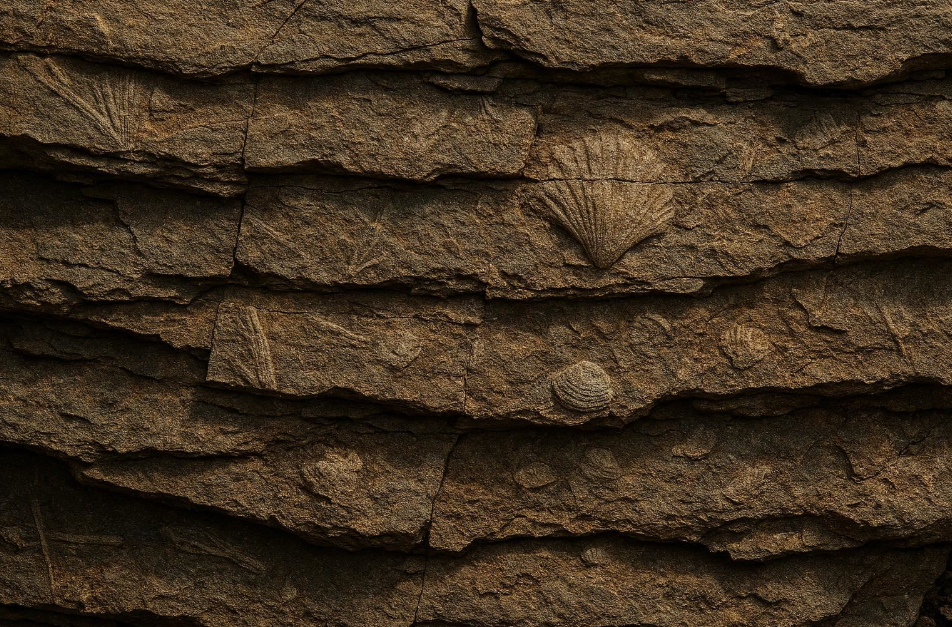
Sedimentary rocks are formed through the deposition, compaction, and cementation of sediments derived from pre-existing rocks, plant remains, or chemical substances. Over time, layers of sediments accumulate, become compacted under pressure, and are cemented together to form solid rock.
There are three main types of sedimentary rocks: clastic sedimentary rocks, formed from fragments of other rocks; chemical sedimentary rocks, formed from the evaporation of mineral-rich water; and organic sedimentary rocks, formed from the remains of plants and animals. Sedimentary rocks are often characterized by layering (strata) and may contain fossils, making them important for studying Earth’s history. Examples include sandstone, limestone, and shale, which are widely used in cement production, glass making, and building materials.
Metamorphic Rocks
Metamorphic rocks are formed when existing rocks are transformed by intense heat and pressure deep within the Earth, without melting completely. This transformation process, known as metamorphism, alters the texture, structure, and mineral composition of the original rock.
Metamorphism can occur as contact metamorphism, caused by heat from nearby magma, or regional metamorphism, caused by large-scale pressure and heat during tectonic movements. Metamorphic rocks are typically hard and durable, and many show foliation, a layered or banded appearance resulting from pressure. Common examples include marble, slate, and gneiss, which are widely used for tiles, roofing materials, decorative stone, and sculpture.
Together, igneous, sedimentary, and metamorphic rocks form a continuous system that explains the diversity of rocks found on Earth and highlights the powerful geological processes shaping the planet’s surface.
Differences Between Igneous, Sedimentary, and Metamorphic Rocks
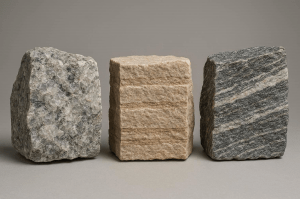
Understanding the differences between igneous, sedimentary, and metamorphic rocks is essential in geography and earth science because each rock type forms through a distinct geological process and displays unique physical characteristics. These differences help geographers, students, and researchers identify rocks in the field, interpret landscapes, and understand Earth’s geological history.
The formation process is the primary factor that distinguishes the three rock types. Igneous rocks form when molten magma or lava cools and solidifies, either beneath the Earth’s surface or after volcanic eruptions. Sedimentary rocks develop from accumulated sediments that are compacted and cemented over time, often in layers. In contrast, metamorphic rocks are formed when existing igneous or sedimentary rocks are altered by intense heat and pressure deep within the Earth, without melting completely.
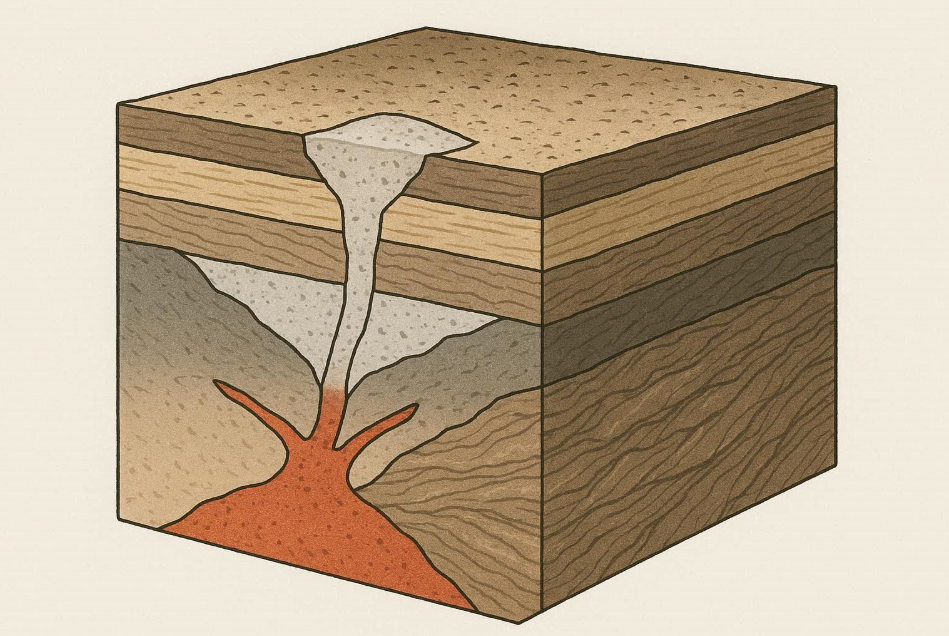
Differences are also visible in texture and structure. Igneous rocks typically have crystalline textures, with interlocking mineral grains that reflect how quickly the magma cooled. Sedimentary rocks often show clear layering or bedding and may feel gritty due to cemented particles. Metamorphic rocks commonly display foliated or banded textures, caused by minerals realigning under pressure, or may appear very dense and hard in non-foliated forms.
Another key difference is the presence or absence of fossils. Fossils are commonly found in sedimentary rocks because these rocks form at or near the Earth’s surface, where plants and animals live and are buried by sediments. Igneous and metamorphic rocks rarely contain fossils, as the high temperatures involved in their formation usually destroy organic remains.
The table below provides a simple comparison of the three major rock types based on their formation and characteristics:
| Rock Type | Formation Process | Texture & Structure | Fossils |
|---|---|---|---|
| Igneous | Cooling and solidification of magma or lava | Crystalline, hard, interlocking minerals | Absent |
| Sedimentary | Deposition, compaction, and cementation of sediments | Layered, often porous or gritty | Common |
| Metamorphic | Alteration by heat and pressure | Foliated or dense, recrystallized minerals | Rare or absent |
By comparing igneous, sedimentary, and metamorphic rocks side by side, it becomes easier to understand how Earth processes create different rock types and how these rocks influence landforms, resources, and human activities across the planet.
Importance of Rocks to Human Life
Rocks play a fundamental role in human life and development. The importance of rocks to human life can be clearly understood by examining how they support construction, provide resources, influence agriculture, and preserve cultural history.
1. Construction and Infrastructure
Rocks are essential materials for building and infrastructure development. Igneous, sedimentary, and metamorphic rocks such as granite, limestone, sandstone, and marble are used in the construction of houses, roads, bridges, dams, and monuments. Crushed rocks are also used in concrete and road surfacing, making rocks the backbone of modern urban and rural infrastructure.
2. Mineral and Energy Resources
Many valuable minerals are obtained from rocks, including iron, copper, gold, and aluminum ores. These minerals are vital for industries, manufacturing, and technological development. In addition, sedimentary rocks host fossil fuels such as coal, petroleum, and natural gas, which remain major sources of energy for electricity generation, transportation, and industrial use.
3. Agriculture and Soil Formation
Rocks contribute significantly to agriculture through soil formation. Over time, weathering breaks rocks into smaller particles that form soils when mixed with organic matter. Different rock types produce soils with varying fertility and mineral content, directly affecting crop growth. Volcanic rocks, for example, often create nutrient-rich soils that support productive farming.
4. Cultural and Historical Significance
Rocks have been used by humans throughout history for tools, sculptures, buildings, and monuments. Ancient civilizations relied on locally available rocks to construct temples, pyramids, and defensive structures. Many rocks also hold cultural, religious, and symbolic importance, serving as sacred sites, historical landmarks, and records of human heritage.
Rocks and Geography Students
For geography students, understanding rocks and their types is not optional; it is a core requirement in both physical geography and earth science. Topics on igneous, sedimentary, and metamorphic rocks regularly appear in major examinations such as WAEC, NECO, GCSE, and A-Level, often in both theory and practical sections. Questions may test definitions, formation processes, rock characteristics, diagrams, and real-world examples, making rock knowledge essential for academic success.
Beyond examinations, the study of rocks builds strong field identification skills. In fieldwork, students learn how to recognize rocks based on texture, colour, hardness, layering, and mineral composition. These practical skills are important for identifying rock types in river valleys, mountain areas, road cuttings, and quarry sites, helping students connect classroom theory with real landscapes.
Rocks also play a major role in map interpretation and landform analysis. Geological maps, topographic maps, and cross-sections often show rock distributions that explain why certain landforms exist in specific locations. For example, resistant igneous rocks may form highlands, while softer sedimentary rocks are associated with plains and valleys. Understanding rock structure allows students to interpret relief, drainage patterns, and slope characteristics more accurately.
Most importantly, rocks provide a strong link between physical geography and human geography. Physically, rocks influence soil formation, landforms, and natural hazards such as landslides and earthquakes. From a human perspective, rocks determine the availability of building materials, mineral resources, groundwater storage, and even settlement patterns. By studying rocks, geography students develop systems thinking, learning how Earth processes, landscapes, and human activities are deeply interconnected.
Conclusion
Rocks are fundamental components of the Earth’s crust, and understanding the three main rock types, igneous, sedimentary, and metamorphic rocks, provides a clear foundation for studying geology and physical geography. Each rock type forms through distinct Earth processes, from the cooling of magma and lava to the deposition and cementation of sediments, and the transformation of existing rocks under heat and pressure. Together, these processes explain how rocks cycle through different forms over geological time and how they contribute to the development of landforms, natural resources, and landscapes across the world.
By linking rock formation to internal and external Earth processes, geography students gain a deeper understanding of how the planet works beneath the surface and why different rocks appear in different environments. This knowledge is essential for interpreting maps, understanding soil and landform development, and recognizing the relationship between rocks, tectonic activity, and human use of natural resources.
Ready to test what you’ve learned? Take our Rocks Quiz to challenge your understanding of igneous, sedimentary, and metamorphic rocks, their characteristics, and the processes that form them.
External References and Further Reading (Rocks)
1. Types of Rocks – Encyclopaedia Britannica
Comprehensive overview of igneous, sedimentary, and metamorphic rocks, including formation and characteristics.
https://www.britannica.com/science/rock-geology
2. Igneous Rocks – National Geographic Education
Clear explanation of igneous rock formation, textures, and examples.
https://education.nationalgeographic.org/resource/igneous-rock/
3. Sedimentary Rocks – National Geographic Education
Explains sedimentary processes, rock layers, and fossil formation.
https://education.nationalgeographic.org/resource/sedimentary-rock/
4. Metamorphic Rocks – National Geographic Education
Detailed overview of metamorphism, heat, pressure, and rock transformation.
https://education.nationalgeographic.org/resource/metamorphic-rock/

Idara Eniang is a passionate digital creator and geographer dedicated to making geography simple, visual, and accessible.